





Overview
What is SMILE Eye Surgery?
SMILE — Small Incision Lenticule Extraction — is a modern laser vision correction procedure that corrects nearsightedness and astigmatism without creating a corneal flap. Often called keyhole vision correction, SMILE uses a single femtosecond laser to sculpt a tiny disc of tissue called a lenticule inside the cornea, which is then gently removed through a small incision roughly 4mm wide. Because no flap is involved, the structural integrity of the cornea is better preserved, making SMILE especially well-suited for patients with dry eyes, active lifestyles, or concerns about flap-related risks. Approved by the FDA for myopia in 2016 and expanded to include astigmatism in 2018, SMILE has been performed more than 7 million times worldwide according to ZEISS clinical data. Kugler Vision was the first practice in Nebraska or Iowa to offer SMILE eye surgery, as well as the first practice in the region offering all 7 modern vision correction procedures.
News & Testimonials

Why It Works
Benefits of SMILE
Here’s what patients gain from this life-changing procedure:
Exceptionally fast: The entire SMILE procedure is completed in about 10 to 15 minutes, with the laser active for approximately 30 seconds. Most patients are surprised by just how fast it is.
Virtually painless: Anesthetic eye drops keep you completely comfortable throughout. You may feel slight pressure for a brief moment, but pain during SMILE is rare.
Quick return to daily life: Most SMILE patients can drive themselves to their follow-up appointment the next morning and return to work and normal activities within 24 hours.
Suitable for dry eye and Contact Lens Intolerance (CLI) patients: SMILE is safe and effective for patients who experience dryness or discomfort from long-term contact lens wear, as it causes less disruption to the corneal nerves responsible for tear production.
Our Difference
Why Choose Kugler Vision for SMILE Eye Surgery
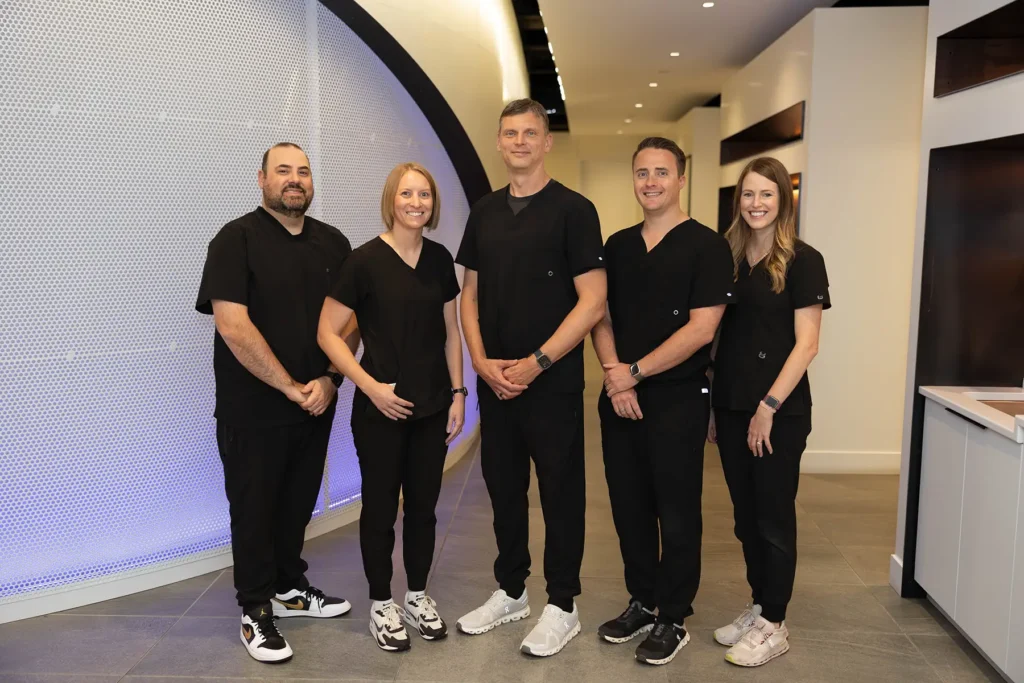
Kugler Vision was the first practice in Nebraska and Iowa to perform SMILE eye surgery, and Dr. Kugler and Dr. Dickson are among a select group of surgeons worldwide with extensive SMILE experience. When you choose us for SMILE in Omaha, you’re choosing a team that recommends this procedure only when it is genuinely the best option for your specific eyes — never because it’s the only tool we have.
First in Nebraska and Iowa for SMILE: Kugler Vision brought SMILE to Nebraska and Iowa, performing the first procedure in the region. That depth of experience with this specific procedure sets our outcomes apart.
All 7 procedures, one expert team: From LASIK and SMILE to EVO ICL and beyond, our full range of options means we always match the right technology to the right patient — not the other way around.
EyeAnalysis™ precision mapping: Every SMILE evaluation begins with our comprehensive EyeAnalysis™, a multi-technology diagnostic exam that precisely maps your cornea and confirms candidacy before any treatment is planned.
11× Best of Omaha winner: Our commitment to outcomes and patient experience has earned Kugler Vision the Best of Omaha award nine times — a recognition voted on by the community we serve.
Patients from 47 states: Patients travel from 47 states to have their vision corrected at our practice, a testament to the trust that patients nationwide place in Dr. Kugler and our team.
Meet Your Surgeons
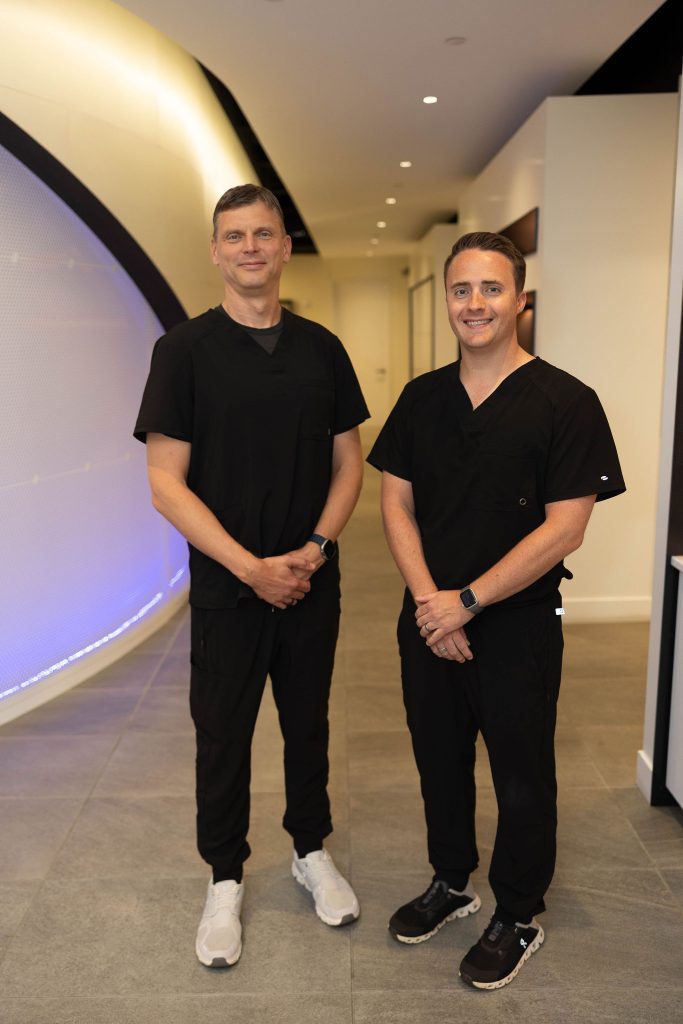
Meet Your SMILE Surgeons in Omaha
Dr. Lance Kugler, M.D.
Lance Kugler, MD brought SMILE eye surgery to Nebraska and Iowa — and was the first surgeon in the region to perform the procedure. Fellowship-trained at the Wang Vision Institute under world-renowned corneal surgeon Dr. Ming Wang, Dr. Kugler has also spoken on the epedemic of myopia and modern vision correction alternatives for TEDxOmaha and holds a Physician CEO designation from the Kellogg School of Management at Northwestern University. He served as Director of Refractive Surgery at the University of Nebraska Medical Center, leading both resident education and clinical research programs to advance the field. A published researcher in peer-reviewed journals including the Journal of Refractive Surgery, national board member, and Board Certified Fellow of the World College of Refractive Surgery & Visual Sciences, Dr. Kugler brings unmatched depth of experience to every SMILE procedure he performs.
Dr. Drew Dickson, M.D.
Drew Dickson, MD is a board-certified cataract and refractive surgeon and a Fellow of the World College of Refractive Surgery & Visual Sciences. He completed his ophthalmology residency at the Storm Eye Institute at the Medical University of South Carolina — a top-10 residency program — before completing his refractive surgery fellowship directly under Dr. Kugler at Kugler Vision. He also holds a Physician CEO designation from the Kellogg School of Management at Northwestern University. Dr. Dickson takes a deeply patient-centered approach, partnering with each patient to develop a customized vision correction plan tailored to their individual needs and goals. A Nebraska native, he is proud to bring world-class refractive expertise back to his home state.
11x
Best of
Omaha
1K+
5-Star
Reviews
47
States
Served
The Procedure
How Does SMILE Eye Surgery Work?
SMILE is an elegantly simple procedure — one laser, one small incision, and results comparable to LASIK. Here’s exactly what to expect on your procedure day.
1. EyeAnalysis™ Confirmation
Your pre-operative diagnostic measurements are reviewed one final time to confirm the precise treatment plan mapped to your unique eye. Your surgeon will walk you through every step before beginning.
2. Numbing & Preparation
Anesthetic eye drops are applied so you won’t feel pain. A gentle holder keeps your eye open, and you’ll be asked to focus on a small blinking light throughout the procedure. A light sedative is offered.
3. Lenticule Creation
The ZEISS VisuMax 800 femtosecond laser creates a tiny, disc-shaped piece of tissue — called a lenticule — within your cornea. This step takes approximately 30 seconds and is completely painless.
4. Lenticule Removal & Correction
Through a small keyhole incision of about 4mm, your surgeon gently removes the lenticule, which reshapes the cornea and corrects your vision. No flap is created, and no stitches are needed. Most patients notice improved vision almost immediately.
Ideal Candidates
Who is a Good Candidate for SMILE?
SMILE is an excellent option for many adults seeking freedom from glasses and contacts — including some patients who may not be ideal candidates for LASIK. As with any vision correction procedure, the only way to know for certain is through a comprehensive EyeAnalysis™ consultation. General candidacy guidelines include:
- Adults ages 22 and older with a stable prescription for at least one year, with myopia (nearsightedness) with or without astigmatism
- Those with sufficient corneal thickness and healthy eyes free of conditions such as keratoconus
- Patients who want an alternative to LASIK — over 80 percent of those who come to Kugler Vision having been turned away elsewhere find a vision correction option that works for them
- SMILE is not the right fit for patients with hyperopia (farsightedness), as it is not currently FDA approved for that condition — in those cases, LASIK or PRK is typically the better path
“One thing I tell every SMILE patient is that I’d rather turn someone away at the consultation than have them leave disappointed. When the diagnostic data tells me SMILE isn’t the right fit — whether that’s because of the prescription type, corneal characteristics, or something else — we’ll say so and tell you what is.” — Drew Dickson, MD


SMILE Technology
The Technology Behind Your Procedure
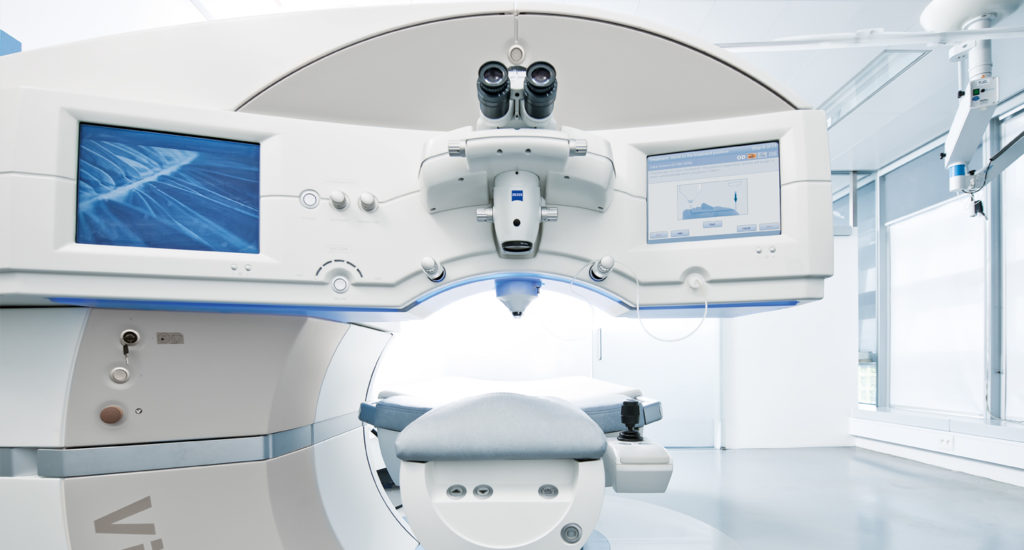
One of the defining features of SMILE is its elegant simplicity: the entire procedure is performed using a single laser platform, the ZEISS VisuMax 800. Unlike LASIK, which requires both a femtosecond and an excimer laser, SMILE is a true one-laser procedure — which contributes to its precision, consistency, and minimal disruption to the cornea.
ZEISS VisuMax
The sole laser used in the SMILE procedure, the VisuMax 800 creates the corneal lenticule with exceptional sub-micron precision and a gentle, low-suction interface — delivering a consistently comfortable experience from start to finish.
EyeAnalysis™ Diagnostic Suite
Before any treatment is planned, your eyes are thoroughly mapped using our multi-technology diagnostic system, which includes the OCULUS Pentacam HD, iTrace Wavefront Analyzer, and additional imaging tools that give Dr. Kugler and Dr. Dickson a complete picture of your ocular anatomy.
ReLEx SMILE Treatment Planning
The VisuMax system’s integrated ReLEx SMILE software translates your EyeAnalysis™ measurements into a precise, individualized treatment plan — ensuring the lenticule is created to exactly the dimensions needed to correct your specific prescription.
What to Expect
SMILE
Recovery and Results
SMILE recovery is fast, comfortable, and remarkably smooth for most patients. The small keyhole incision heals within 24 hours, and the majority of patients are back to their normal routine the very next day. Here’s what to expect at each stage.
Day
1
Most patients notice significantly clearer vision by the morning after their procedure and are cleared to drive and return to work. You'll attend a brief 24-hour follow-up appointment so we can confirm your eyes are healing as expected.
Week
1
Mild dryness or a gentle gritty sensation — both normal parts of healing — resolve quickly with lubricating drops. We ask that you avoid wearing eye makeup and swimming for one week to reduce any risk of irritation or infection.
Month
3
Vision continues to sharpen and stabilize. By this point most patients have reached their full visual result, often 20/20 or better. This is also when any residual dryness has typically resolved completely.
Year
1
Your one-year follow-up confirms your long-term outcome. SMILE is a permanent procedure — the lenticule removal changes the shape of your cornea for good, and when performed on a stable prescription, your results are designed to last a lifetime.
Safety & Confidence
Is SMILE Eye Surgery Safe?
Yes. SMILE has been performed more than 7 million times worldwide and has received FDA approval for safety and effectiveness. It is the least disruptive laser vision correction procedure available — the small keyhole incision preserves significantly more of the cornea’s surface and nerve structure compared to LASIK, which means less disruption to tear film stability and a lower likelihood of post-procedure dry eye. As with all vision correction procedures at Kugler Vision, your safety begins long before the day of your procedure: our comprehensive EyeAnalysis™ eye examination screens for every factor that could affect your outcome, and Dr. Kugler or Dr. Dickson personally reviews all diagnostic results before making any recommendation. Follow-up care at one day, one week, one month, and beyond ensures your eyes heal exactly as intended.
As with any surgical procedure, SMILE carries a small number of risks that are worth understanding before you decide. The most commonly reported temporary side effect is mild dry eye, which tends to be less frequent and less severe after SMILE than after LASIK due to the flapless approach — but it can occur and is managed with lubricating drops. Some patients notice slightly slower visual recovery in the first week compared to LASIK, with vision fully sharpening over two to four weeks. A small percentage of patients benefit from an enhancement procedure if the initial correction falls slightly short of target. Your surgeon reviews all of these possibilities personally at your consultation so you can make a fully informed decision.
“One thing I tell every SMILE patient is that I’d rather turn someone away at the consultation than have them leave disappointed. When the diagnostic data tells me SMILE isn’t the right fit — whether that’s because of the prescription type, corneal characteristics, or something else — we’ll say so clearly and tell you what is. That’s the only way I know how to practice.” — Drew Dickson, MD
Pricing & Financing
How Much Does SMILE Cost in Omaha?
The cost of SMILE eye surgery at Kugler Vision depends on your prescription and the specifics of your treatment plan. SMILE is priced comparably to LASIK at our practice — the primary variable is prescription complexity, not the procedure itself. What remains constant is our commitment to transparent, no-hidden-fee pricing. When you consider the long-term cost of corrective lenses — glasses, contacts, solutions, and annual prescription updates — vision correction typically pays for itself within approximately five years and continues saving you money every year after that. We offer flexible financing through Alphaeon Credit with 0% interest when your balance is paid in full within 24 months, and SMILE is both FSA and HSA eligible, allowing you to use pre-tax dollars toward the cost. Complete pricing details will be provided at your consultation at our practice in Omaha, Nebraska.
Common Questions
Frequently Asked Questions About SMILE Eye Surgery
Have more questions? Our team is happy to talk through anything before your consultation.
How is SMILE different from LASIK?
Both procedures correct vision by reshaping the cornea, but they use different approaches. LASIK creates a thin corneal flap, lifts it, uses an excimer laser to reshape the tissue beneath, then replaces the flap. SMILE creates no flap at all — instead, a femtosecond laser forms a small lenticule inside the cornea, which is removed through a tiny keyhole incision. The result is the same crisp, clear vision, but SMILE preserves more of the cornea’s surface structure and involves less disruption to the nerves that support tear production.
What vision conditions can SMILE treat?
SMILE is FDA approved to treat myopia (nearsightedness) and myopic astigmatism. It is not currently approved for hyperopia (farsightedness). If farsightedness is your primary refractive error, LASIK, PRK, or another procedure may be a better fit — which is exactly why we evaluate each patient individually rather than recommending one procedure to everyone.
Does SMILE hurt?
No. Anesthetic eye drops are applied before your procedure begins, and the most you’ll feel is a brief sensation of mild pressure during lenticule creation. The laser step lasts approximately 30 seconds. Afterward, some patients notice mild dryness or a light gritty feeling for a day or two, which resolves with lubricating drops.
How long does SMILE last? Does it wear off?
SMILE is permanent. The lenticule removal changes the shape of your cornea, and that change does not revert. Like all people, SMILE patients may notice subtle shifts in visual perception after age 40 or so — but this is the natural aging of the eye’s crystalline lens, an entirely different structure from the area modified during SMILE. It is unrelated to the procedure and is separately treatable.
Can I have SMILE if I have dry eyes or contact lens intolerance?
In many cases, yes — and SMILE may actually be preferable over LASIK for patients with dry eye concerns. Because SMILE does not create a corneal flap, it severs significantly fewer corneal nerves, resulting in less impact on tear film stability post-procedure. Patients with contact lens intolerance (CLI) are also often good SMILE candidates. Your EyeAnalysis™ consultation will include a thorough assessment of your ocular surface health to confirm candidacy.
What are the activity restrictions after SMILE?
Most normal activities — driving, working, light exercise — can resume the day after your procedure. We ask that you avoid eye makeup and swimming for one week following SMILE to reduce any risk of irritation or infection. UV protection is especially important in the weeks after any laser vision correction, so wear sunglasses outdoors. Your surgeon will provide a complete set of post-operative instructions tailored to your lifestyle at your procedure appointment.
Can both eyes be treated in the same procedure?
Yes. We routinely perform SMILE on both eyes in a single session, which is the standard approach at Kugler Vision. Treating both eyes the same day means a single recovery period, fewer appointments, and faster overall results.
What should I look for when choosing a SMILE surgeon?
Look for a surgeon who is fellowship-trained in corneal and refractive ophthalmology, has a meaningful volume of SMILE procedures specifically — not just laser vision correction generally — and uses a thorough diagnostic process before recommending any treatment. Ask whether the surgeon performs SMILE regularly, how they handle cases that don’t go as planned, and whether the practice offers long-term follow-up care. Both Dr. Kugler and Dr. Dickson meet all of these criteria, and Dr. Kugler was among the earliest surgeons in the country to introduce SMILE.
What If SMILE Isn’t Right for You?
Not every patient is a SMILE candidate — and because SMILE is currently approved only for myopia and myopic astigmatism, patients with farsightedness or certain corneal characteristics may need a different approach. LASIK remains an excellent alternative for many patients, achieving the same visual outcome through a flap-based technique with a slightly faster initial recovery. For patients with high prescriptions or corneas that fall outside laser treatment parameters, EVO ICL is an implantable lens option that corrects vision without removing any corneal tissue at all. PRK is another laser alternative for patients with thinner corneas or surface irregularities that make either SMILE or LASIK less ideal. Your EyeAnalysis™ consultation will identify which procedure — if any — is the right fit, and your surgeon will explain the recommendation clearly before you make any decision.
Patient Stories
Hear From Our
SMILE Patients






Visit Us
Our Omaha
Location
As the only team in Omaha to specialize in all seven vision correction procedures– we have customized solutions to treat even tough vision problems so you can experience life glasses and contacts free.
Our Office
17838 Burke St. Suite 100
Omaha, NE 68118
Call Us
(402) 558-2211
Office Hours
Mon-Fri:
7:45AM-5PM
Sat-Sun: Closed
Schedule Today
Schedule Your
Consultation in Omaha
At Kugler Vision, your modern procedure is tailored to deliver the very best experience possible – that’s why we’ve been voted the Best in Omaha provider by our patients eleven years in a row!