







Overview
What is Blended Vision?
Blended vision is a vision correction approach designed for adults in their 40s and beyond who want to reduce or eliminate their dependence on reading glasses. As the eye ages, the natural lens loses flexibility and the ability to shift focus between near and far distances, a condition called presbyopia. Blended vision addresses this by using LASIK to correct one eye for clear distance vision and the other for clear near vision. The brain learns to blend the input from both eyes, allowing you to see across a full range of distances without reaching for glasses. The technique is not new, but the precision with which it can now be delivered using advanced laser vision correction technology has made it a genuinely compelling option for patients who are tired of reading glasses but still want the freedom of clear vision at every distance. If you have been squinting at menus, holding your phone at arm’s length, or quietly sliding reading glasses on and off throughout the day, blended vision may be the solution you have been looking for.

Why It Works
Benefits of Blended Vision
For patients in their 40s and 50s who assumed that reading glasses were simply their future, blended vision offers a different answer. Here is what patients gain from this approach:
Freedom from reading glasses: Blended vision directly addresses the reading glasses problem that affects most adults beginning in their early to mid-40s. Many patients are able to eliminate reading glasses entirely after their procedure.
A full range of vision: Rather than correcting only distance vision, blended vision gives both near and far clarity simultaneously. Patients report being able to see a menu, a dashboard, and a road sign without switching between aids.
Quick procedure, fast recovery: Blended vision is delivered using the same advanced laser technology used for precision vision correction. The treatment itself takes less than 10 minutes per eye, and most patients return to work the following day.
The brain adapts quickly: Because each eye has always done slightly different visual work, the brain adapts to blended vision more readily than most patients expect. The adjustment period is typically short, and patients frequently describe the transition as surprisingly natural.
Background
Understanding Dysfunctional Lens Syndrome
Blended vision exists specifically to address the earliest stage of a natural aging process called Dysfunctional Lens Syndrome, or DLS. Understanding where you are within that process is the single most important factor in determining whether blended vision is the right solution for you.
The Reading Glasses Stage
Stage 1 DLS, commonly called presbyopia, typically begins in the early to mid-40s. The eye’s natural lens starts to lose its flexibility, making it progressively harder to shift focus between near and far distances. This is the stage where reading glasses appear and blended vision is most appropriate. Distance vision is generally still strong.
The Lens Begins to Change
Stage 2 DLS typically begins in the late 40s to mid-50s. The lens has started to yellow, which reduces how much light it can transmit and affects clarity at all distances, not just near. At this stage, a lens replacement procedure is generally a better path than a laser approach, since the lens itself is the source of the problem.
Cataract
Stage 3 DLS is what is commonly known as a cataract. The lens has become cloudy enough to meaningfully affect vision and requires treatment. In the United States, the average age for cataract surgery is 73. Advanced laser cataract surgery with a premium lens implant addresses both the cataract and vision correction in a single procedure.
Our Difference
Why Choose Kugler Vision for Blended Vision
Blended vision is a personalized approach that requires both diagnostic precision and clinical experience. A successful outcome depends on correctly identifying the dominant eye, mapping the right correction for each eye individually, and ensuring the patient has genuinely experienced the result before committing. At Kugler Vision, that process is built into every blended vision evaluation.
A simulation using contacts: Patients are offered the option for a trial using contact lenses to simulate how blended vision would affect your daily life. You wear the simulation for several days to confirm it works for you.
Full-spectrum DLS expertise: Blended vision is one of seven vision correction approaches we offer, which means we recommend it only when it is genuinely the right fit. Patients whose DLS has progressed beyond the early stages are guided toward more appropriate options without pressure to choose blended vision.
First in Nebraska and Iowa for comprehensive vision correction: Kugler Vision was among the first practices in Nebraska and Iowa to offer all 7 modern vision correction procedures, giving patients access to every available option and ensuring that blended vision is recommended only when the data supports it.
Meet Your Surgeons
Meet Your LASIK Surgeons in Omaha
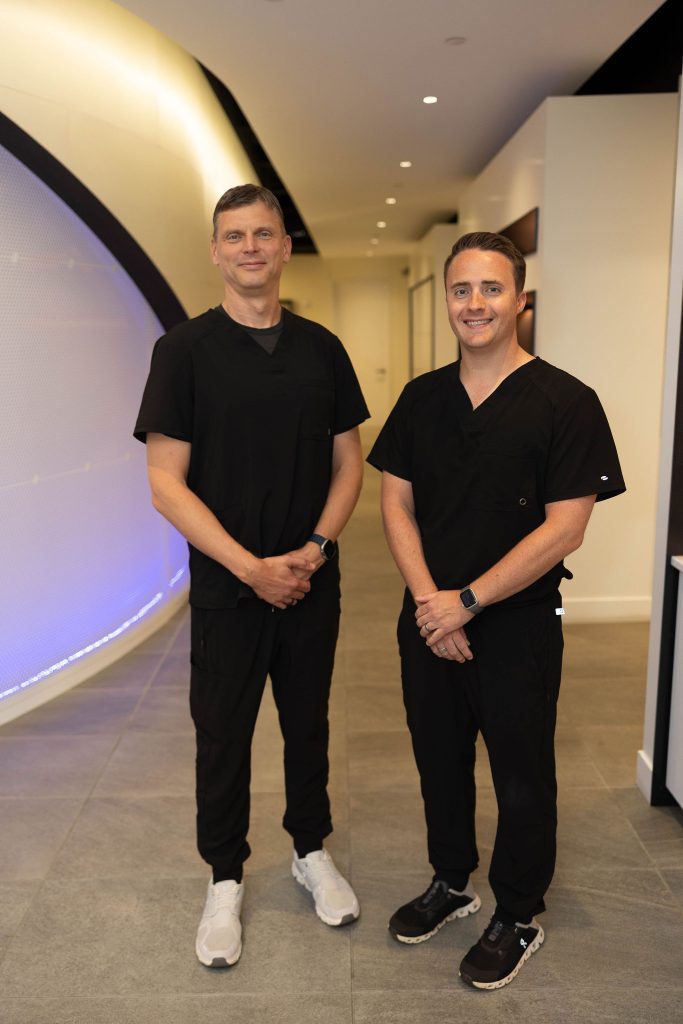
Lance Kugler, M.D.
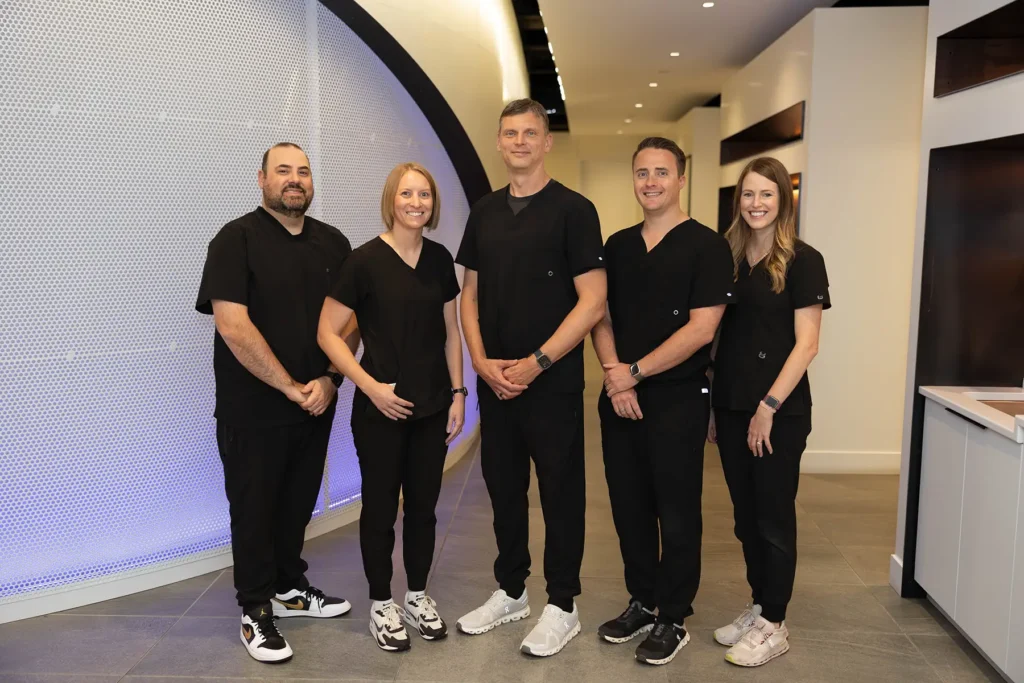
Lance Kugler, MD is Omaha’s most experienced refractive surgeon and one of the most credentialed in the country. Fellowship-trained at the Wang Vision Institute under world-renowned corneal surgeon Dr. Ming Wang, Dr. Kugler served as Director of Refractive Surgery at the University of Nebraska Medical Center, where he led both resident education and clinical research programs. A published researcher in peer-reviewed journals including the Journal of Refractive Surgery, national board member, and Board Certified Fellow of the World College of Refractive Surgery and Visual Sciences, Dr. Kugler has guided hundreds of patients through the blended vision decision-making process and understands exactly what it takes for the approach to succeed long-term.
Drew Dickson, M.D.
Drew Dickson, MD, PCEO brings a rare combination of surgical expertise and executive leadership to the Kugler Vision team. Board-certified in cataract and refractive surgery and a Fellow of the World College of Refractive Surgery and Visual Sciences, Dr. Dickson completed his ophthalmology residency at the Storm Eye Institute at the Medical University of South Carolina, a top-10 residency program, before completing his refractive surgery fellowship directly under Dr. Kugler at Kugler Vision. He also completed the Physician CEO program at the Kellogg School of Management at Northwestern University, the same executive training that distinguishes Dr. Kugler’s leadership approach and reflects Kugler Vision’s commitment to excellence both in and out of the operating room. Dr. Dickson takes a deeply patient-centered approach, partnering with each patient to develop a customized vision correction plan tailored to their individual needs and goals.
11x
Best of
Omaha
1K+
5-Star
Reviews
47
States
Served
The Procedure
How Does Blended Vision Work?
Here is what to expect from start to finish.
1. EyeAnalysis™ Confirmation
Your evaluation includes a full diagnostic workup to assess your prescription, corneal health, and ocular dominance. This data determines which eye will be optimized for distance and which for near, and confirms you are a strong candidate before any further steps are taken.
2. Numbing & Preparation
On your procedure day, anesthetic eye drops are applied. A gentle holder keeps each eye open in turn, and you will be asked to focus on a fixed light. A mild sedative is available if you would like one.
3. LASIK Correction
The WaveLight EX500 excimer laser performs LASIK on each eye according to its individual treatment plan, one optimized for distance and one for near. The laser is active for only seconds per eye, and the eye-tracking system adjusts in real time to account for any movement. The entire procedure takes under 10 minutes.
Ideal Candidates
Who is a Good Candidate for Blended Vision?
Blended vision is best suited for adults who are experiencing the early stages of age-related reading vision changes and are motivated to reduce or eliminate dependence on reading glasses. General candidacy guidelines include:
Adults typically in their 40s or early 50s and are experiencing difficulty with near tasks such as reading, device screens, or close-up work
Patients with healthy corneas and a stable prescription who are strong candidates for laser vision correction
Patients who understand that blended vision involves a slight intentional reduction in near vision in one eye and distance vision in the other, and who are comfortable with the brain’s adaptation process
Those who have been evaluated for DLS stage and confirmed to be in Stage 1, where the lens is losing flexibility but has not yet begun to yellow or cloud
Blended Vision Technology
The Technology Behind Your Procedure
Blended vision at Kugler Vision uses the same advanced laser technology that powers our other precision vision correction procedures, ensuring each eye receives a treatment built specifically around its individual correction target.
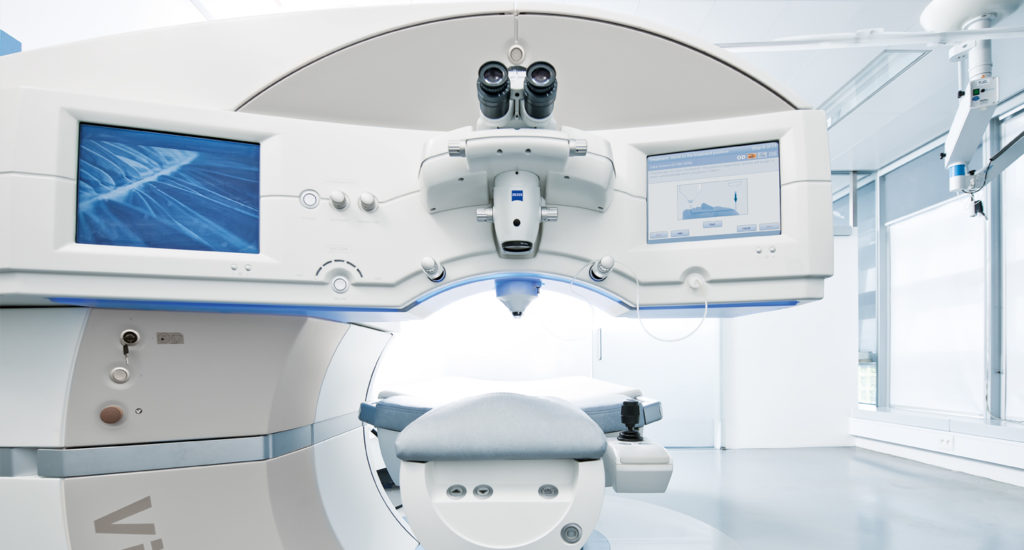
WaveLight EX500 Excimer Laser
The excimer laser delivers the precise corneal reshaping needed for each eye’s individual target, one optimized for distance, one for near. Wavefront-optimized treatment preserves the natural contour of the cornea and supports quality vision across lighting conditions, including at night. The system tracks your eye 400 times per second throughout the procedure.
EyeAnalysis™
Accurate blended vision outcomes begin with accurate measurements. Our EyeAnalysis™ includes corneal topography, wavefront analysis, and ocular dominance testing using multiple diagnostic systems. The data from this evaluation informs not just candidacy but the precise correction targets for each individual eye.
What to Expect
Blended Vision
Recovery and Results
Blended vision recovery follows the same timeline as standard laser vision correction, with the addition of an adaptation period as the brain learns to integrate the different focal points of each eye. Most patients are pleasantly surprised by how quickly that adjustment happens.
Day
1
Most patients notice significantly improved vision the morning after their procedure and are cleared to drive and return to work at their 24-hour follow-up appointment. Both eyes will be clearer, though the brain's blending process is still in its early stages at this point.
Week
1-2
The brain continues to adapt to integrating near and distance input from each eye. Some patients notice mild variability during this period, which is normal and expected. Most patients are functioning comfortably in all daily tasks within the first two weeks.
Month
1
For most patients the adaptation is complete and blended vision feels natural and effortless. Near and distance clarity are well established. A one-month follow-up confirms your outcome and addresses any remaining questions about the adaptation process.
LONG TERM
10+
The correction itself is permanent. However, the underlying aging process of the eye's lens continues over time, and some patients find that their near vision needs evolve in later years. Ongoing annual eye examinations are recommended for all patients to monitor vision and ocular health.
Pricing & Financing
How Much Does Blended Vision Cost in Omaha?
The cost of blended vision at Kugler Vision is reviewed with you in detail at your private EyeAnalysis™ consultation — after your eyes have been thoroughly evaluated and blended vision has been identified as the right approach for you. That way, the pricing conversation is grounded in exactly what your treatment requires. What never changes is our commitment to transparent, no-hidden-fee pricing. Vision correction typically pays for itself within approximately five years when compared to the cumulative cost of reading glasses, prescription updates, and contact lenses. We offer flexible financing through Alphaeon Credit with 0% interest when your balance is paid in full within 24 months, and blended vision is FSA and HSA eligible.
Common Questions
Frequently Asked Questions About Blended Vision
Have more questions? Our team is happy to talk through anything before your consultation.
Is blended vision safe?
Yes. Blended vision uses the same FDA-approved LASIK technology with the same established safety record, applied with a personalized treatment plan for each eye. The simulation protocol adds an additional safeguard: no patient undergoes a permanent procedure without first confirming through real-world experience that the outcome meets their needs and that they are genuinely ready to leave corrective lenses and bifocals behind. As with any vision correction procedure, temporary dry eye, halos, or light sensitivity can occur during the early healing period. A small number of patients find the brain adaptation more challenging than expected, though this typically resolves with time. Proper patient selection through our EyeAnalysis™ evaluation and simulation protocol is the most important safety measure we take.
Will I still need reading glasses after blended vision?
Most patients are able to eliminate reading glasses entirely or reduce their dependence significantly. Visual perception varies depending on the individual prescription and how well the brain adapts, which is part of why the simulation is so important. The goal of the consultation process is to establish realistic expectations for your specific eyes before any permanent correction is made. We encourage anyone with questions about their expected outcome to discuss them in detail at a consultation at our office in Omaha, Nebraska.
Does blended vision work for both nearsighted and farsighted patients?
Yes, though the approach is tailored differently depending on your starting prescription. Patients with myopia (nearsightedness) who also need reading correction can achieve blended vision through a customized LASIK treatment plan. Patients with hyperopia (farsightedness) who only need near correction can also be candidates. Mild astigmatism can often be addressed as part of the same treatment plan. Your EyeAnalysis™ evaluation determines the specific correction targets for each eye and confirms whether the approach is appropriate for your prescription profile.
What should I look for when choosing a blended vision surgeon?
Look for a surgeon who is experienced in both LASIK and the specific application of blended vision, who uses a simulation protocol before committing to any permanent treatment, and who understands the full spectrum of age-related vision changes including DLS staging. Ask about the practice’s outcomes data and what final visual acuity results their blended vision patients typically achieve. Because blended vision is a personalized approach, the consultation and evaluation process matters as much as the procedure itself. Ask whether the practice offers a pre-procedure simulation, how they determine dominant eye mapping, and what they recommend if the simulation result is not what you hoped for. Both Dr. Kugler and Dr. Dickson approach blended vision with this level of care.
What if blended vision isn't right for you?
If the blended vision simulation reveals that the approach is not the right fit, or if your EyeAnalysis™ results indicate your lens has progressed beyond Stage 1 DLS, there are other strong options. Refractive Lens Exchange replaces the eye’s natural lens with a premium artificial lens and is often the better path for patients whose lens has begun to yellow or reduce light transmission, typically beginning in the late 40s to mid-50s. For patients with cataracts, advanced laser cataract surgery with a premium lens addresses both the cataract and the vision correction in a single procedure. Your surgeon will explain the recommendation clearly and match the right approach to where your vision actually is today.
Patient Stories
Hear From Our
Blended Vision Patients





Visit Us
Our Omaha
Location
As the only team in Omaha to specialize in all seven vision correction procedures– we have customized solutions to treat even tough vision problems so you can experience life glasses and contacts free.
Our Office
17838 Burke St. Suite 100
Omaha, NE 68118
Call Us
(402) 558-2211
Office Hours
Mon-Fri:
7:45AM-5PM
Sat-Sun: Closed
Schedule Today
Schedule Your
Consultation in Omaha
At Kugler Vision, your modern procedure is tailored to deliver the very best experience possible – that’s why we’ve been voted the Best in Omaha provider by our patients eleven years in a row!
Tags: LASIK Alternatives, LASIK Financing, LASIK FAQ, Questions to Ask, Does LASIK Wear Off, LASIK Safety, Astigmatism