






Overview
What is Refractive Lens Exchange?
Refractive Lens Exchange, or RLE, is a vision correction procedure that removes the eye’s natural crystalline lens and replaces it with a precisely selected artificial intraocular lens, called an IOL. The result is clear vision at the distances your new lens is designed for, correcting your glasses prescription, reducing or eliminating reading glass dependence, and in most cases addressing astigmatism as well. All in a single procedure. RLE is most often recommended for patients experiencing presbyopia, the age-related condition in which the eye’s natural lens loses flexibility and near focus becomes difficult, or for those whose lens has progressed beyond that early stage into more significant visual decline. For patients in the later stages of Dysfunctional Lens Syndrome, RLE replaces the source of the problem rather than working around it. Because the natural lens is removed entirely, cataracts can never develop in the treated eye. This gives patients one less thing to worry about for the rest of their lives.
News & Testimonials

Why It Works
Benefits of Refractive Lens Exchange
If you are tired of juggling reading glasses, bifocals, and a prescription that keeps changing, RLE offers something the others do not. Here is what patients gain:
Addresses the root cause: RLE replaces the actual source of age-related vision decline, the natural lens, rather than working around it. The result is improved vision quality at all distances, including clarity that glasses and contacts could not fully restore.
Permanent cataract prevention: One of the most significant benefits of RLE is that the procedure permanently eliminates the possibility of cataracts. Once the natural lens has been replaced, there is no lens left to cloud. This is a benefit no other vision correction procedure offers.
Freedom from reading glasses: Premium multifocal and extended depth of focus IOLs are designed to provide clear vision at near, intermediate, and far distances simultaneously. Many patients are able to eliminate reading glasses and bifocals entirely after RLE.
Addresses astigmatism: Toric IOLs are specifically designed to correct astigmatism as part of the lens exchange, meaning RLE can address multiple vision issues in a single procedure.
A permanent solution: The IOL placed during RLE does not change over time, degrade, or develop the same age-related issues as the natural lens. The vision correction achieved is designed to last a lifetime.
Our Difference
Why Choose Kugler Vision for Refractive Lens Exchange
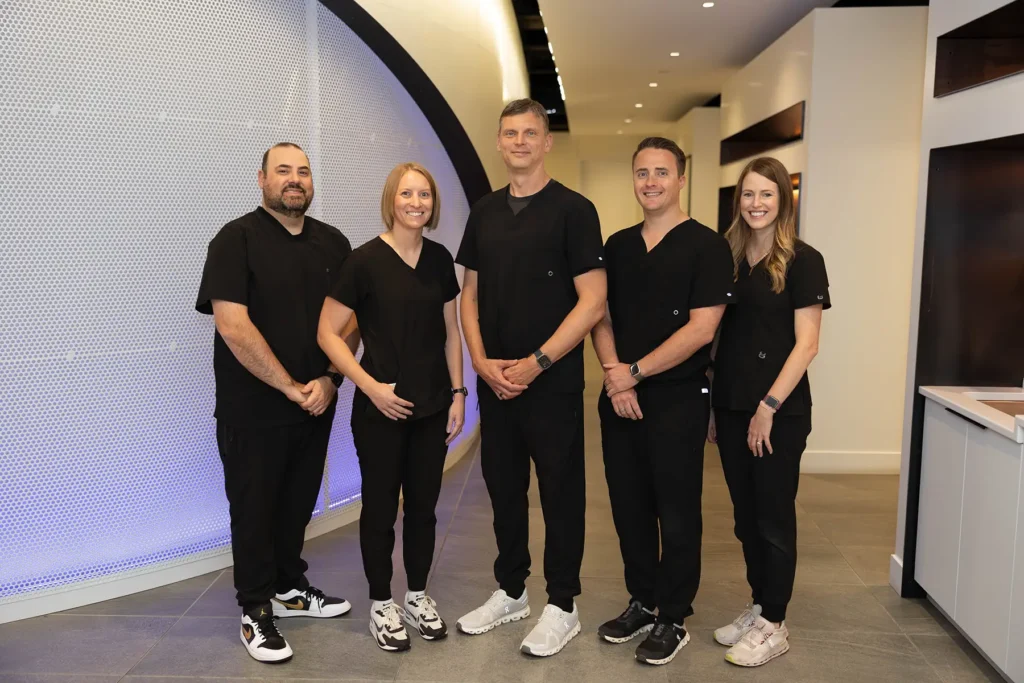
RLE outcomes depend heavily on three things: the accuracy of the pre-operative diagnostic process, the experience of the surgeon selecting and placing the lens, and the quality of the lens technology itself. Kugler Vision excels on all three.
First in Nebraska and Iowa for comprehensive vision correction: Kugler Vision was the first practices in Nebraska and Iowa to offer all 7 modern vision correction procedures. RLE is a procedure our surgeons perform regularly and recommend with confidence when the diagnostic data supports it.
EyeAnalysis™ precision lens selection: Our EyeAnalysis™ evaluation for RLE candidates includes precise biometry, corneal topography, and optical quality assessment to determine which IOL technology will deliver the best outcome for your specific eye. The data from this evaluation directly informs the lens selection recommendation.
Published RLE expertise: Dr. Kugler published the RLE Decision Tree in Cataract and Refractive Surgery Today, a peer-reviewed clinical publication, demonstrating a depth of RLE-specific expertise that extends beyond the procedure room into the research and methodology that shapes best practice.
Meet Your Surgeons
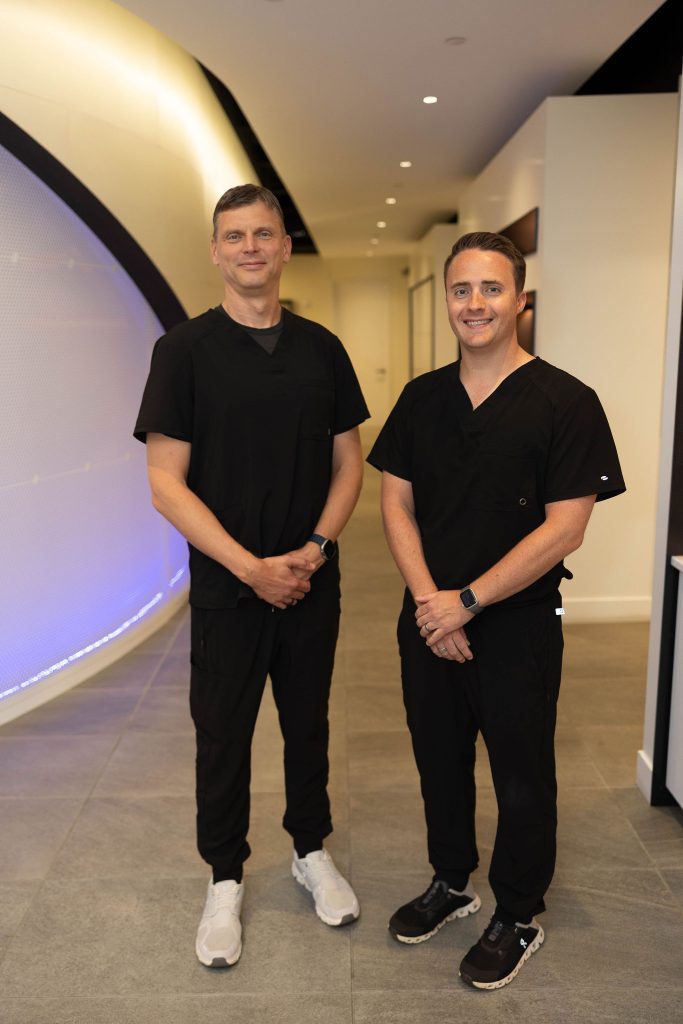
Meet Your RLE Surgeons in Omaha
Dr. Lance Kugler, M.D.
Lance Kugler, MD is Omaha’s most experienced refractive surgeon and one of the most credentialed in the country. Fellowship-trained at the Wang Vision Institute under world-renowned corneal surgeon Dr. Ming Wang, Dr. Kugler served as Director of Refractive Surgery at the University of Nebraska Medical Center, where he led both resident education and clinical research programs. A published researcher in peer-reviewed journals including the Journal of Refractive Surgery and Cataract and Refractive Surgery Today, national board member, and Board Certified Fellow of the World College of Refractive Surgery and Visual Sciences, Dr. Kugler has developed a specific body of published work around RLE and premium IOL selection that reflects his commitment to this procedure as a cornerstone of the practice.
Dr. Drew Dickson, M.D.
Drew Dickson, MD brings a rare combination of surgical expertise and executive leadership to the Kugler Vision team. Board-certified in cataract and refractive surgery and a Fellow of the World College of Refractive Surgery and Visual Sciences, Dr. Dickson completed his ophthalmology residency at the Storm Eye Institute at the Medical University of South Carolina, a top-10 residency program, before completing his refractive surgery fellowship directly under Dr. Kugler at Kugler Vision. He also completed the Physician CEO program at the Kellogg School of Management at Northwestern University, the same executive training that distinguishes Dr. Kugler’s leadership approach and reflects Kugler Vision’s commitment to excellence both in and out of the operating room. Dr. Dickson takes a deeply patient-centered approach, partnering with each patient to develop a customized vision correction plan tailored to their individual needs and goals.
11x
Best of
Omaha
1K+
5-Star
Reviews
47
States
Served
The Procedure
How Does Refractive Lens Exchange Work?
RLE takes approximately 10 to 15 minutes per eye and is performed on an outpatient basis. Here is what to expect.
1. EyeAnalysis™ Confirmation
Your pre-operative measurements are reviewed in full. The IOL selected for your eye, chosen based on your biometry, corneal data, and vision goals, has been ordered in advance. Your surgeon walks you through each step before beginning.
2. Numbing & Preparation
Anesthetic eye drops are applied so you feel no pain. A mild sedative is available to help you relax. A gentle holder keeps your eye open, and you will be asked to focus on a light throughout the procedure.
3. Lens Removal
A tiny incision is made at the edge of the cornea. Using gentle ultrasound energy, the natural crystalline lens is broken up and removed through this small opening. The incision is typically self-sealing and requires no stitches.
4. IOL Implantation
The artificial intraocular lens, folded for insertion, is guided through the same small incision and positioned precisely within the lens capsule, the thin membrane that held your natural lens. The IOL unfolds into place and is centered by your surgeon.
5. Recovery Begins
Most patients notice improved vision almost immediately, even before leaving the procedure room. You will need a driver to take you home on your procedure day. A follow-up appointment the next morning confirms the lens is positioned correctly and your eye is healing well.
Ideal Candidates
Who is a Good Candidate for Refractive Lens Exchange?
RLE is most appropriate for patients who are experiencing age-related vision changes driven by changes in the natural lens, rather than corneal issues. It is the right procedure when the lens itself is the limiting factor in your vision. General candidacy guidelines include:
Adults typically in their late 40s through 60s experiencing Stage 2 or Stage 3 DLS, where the lens has begun to yellow, reduce light transmission, or cloud
Patients who want to reduce or eliminate dependence on reading glasses, bifocals, or progressive lenses for a wide range of daily tasks
Those with astigmatism, as toric IOLs can correct this as part of the same procedure
Patients with very high prescriptions for whom corneal vision correction may not achieve ideal results
Anyone who wants to permanently eliminate the possibility of cataracts, since RLE removes the natural lens before it can progress to that stage
Patients who have been told they have early cataracts and would benefit from addressing them proactively with a premium lens before their vision deteriorates further
“The patients who benefit most from RLE are the ones who come in frustrated. They have good distance vision from an old prescription, they are wearing reading glasses constantly, and they feel like their vision quality just is not what it used to be. When I look at their diagnostic data and see the lens yellowing and the optical quality declining, RLE is the obvious answer. We are not working around the problem, we are fixing it.” — Lance Kugler, MD
RLE Technology
Choosing the Right IOL
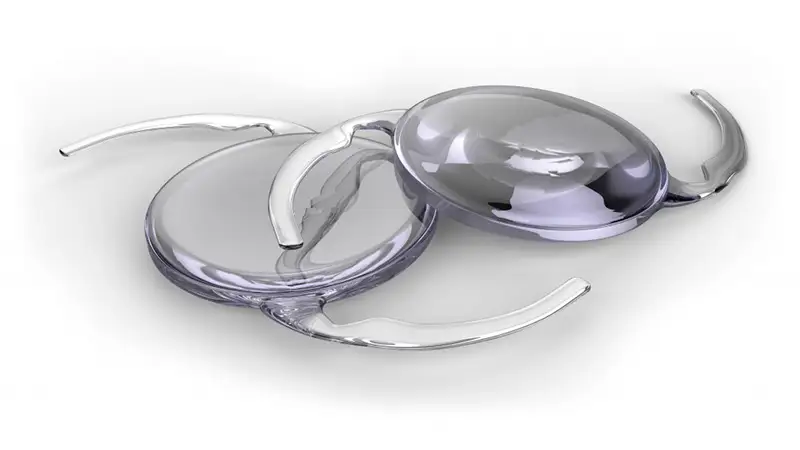
The most important technology decision in RLE is the selection of the intraocular lens. Kugler Vision offers the full range of premium IOL technologies and uses your EyeAnalysis™ data, your lifestyle needs, and your vision goals to recommend the lens that is right for you specifically.
Monofocal IOL
A monofocal lens provides excellent clarity at one focal distance, most commonly set for distance vision. Patients with a monofocal IOL will typically still use reading glasses for near tasks. This lens is a strong choice for patients who prioritize the sharpest possible distance vision and are comfortable with readers for close work.
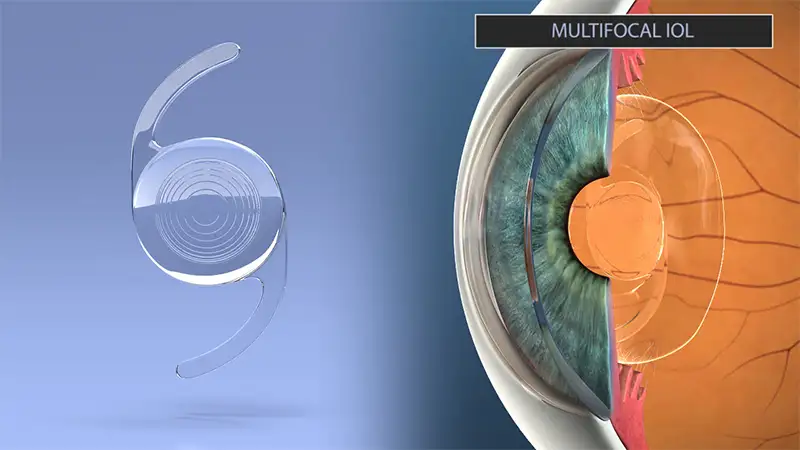
Multifocal IOL
Multifocal lenses use concentric rings of different focal powers to provide vision at multiple distances simultaneously, typically near, intermediate, and far. Many patients achieve complete independence from glasses with a multifocal IOL. There is an adaptation period as the brain learns to select the appropriate focal zone, and some patients notice halos or glare around lights at night during this adjustment.
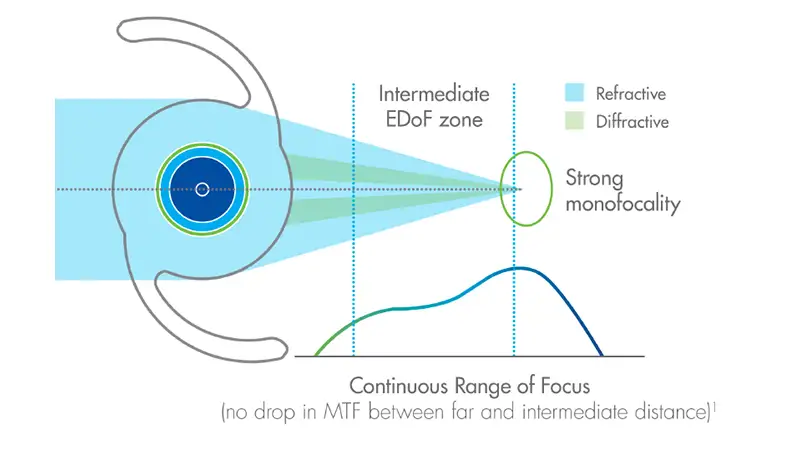
Extended Depth of Focus (EDOF) IOL
EDOF lenses provide a continuous extended range of clear vision, typically from intermediate to distance, with better low-light performance than multifocal lenses. They are a strong choice for patients who spend significant time at computer distance and want to minimize night vision disturbances, though they may still benefit from light readers for very fine near work.
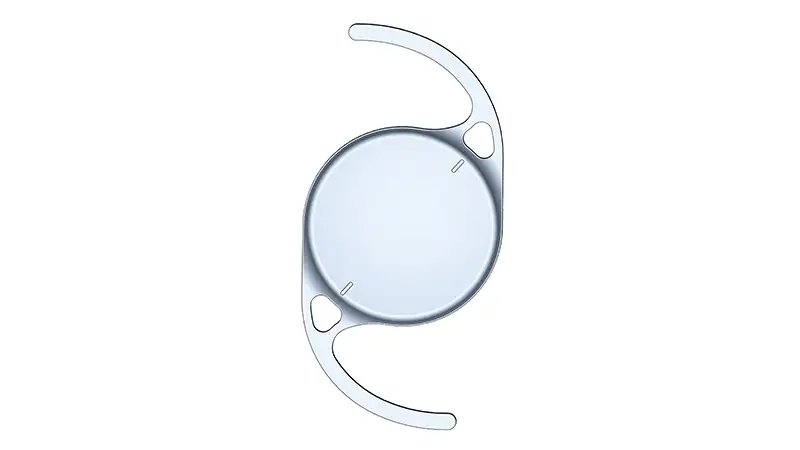
Toric IOL
Toric IOLs are designed to correct astigmatism in addition to the primary refractive error. They are available in monofocal, multifocal, and EDOF designs, allowing patients with astigmatism to benefit from any of the above technologies while achieving the clearest possible outcome.
Light Adjustable Lens (LAL)
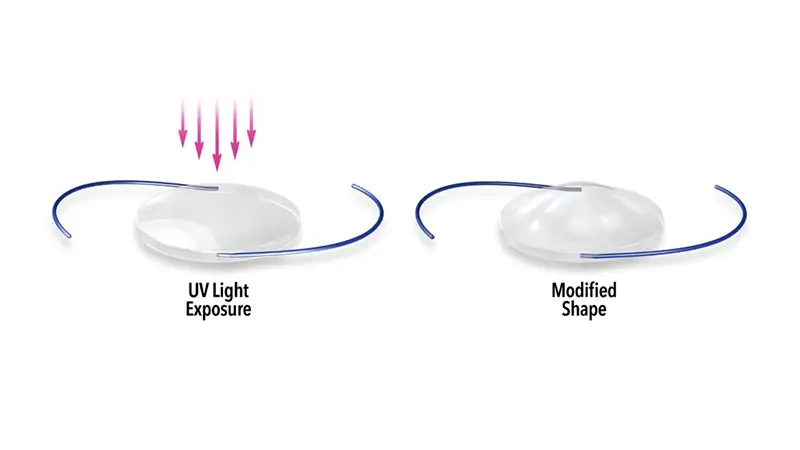
The Light Adjustable Lens is the only IOL that can be customized after it has been implanted. Made from a proprietary photosensitive material, the LAL allows your surgeon to fine-tune your vision prescription non-invasively in the weeks following surgery using a precise UV light treatment called the Light Delivery Device. Once your optimal prescription is dialed in, a final light treatment permanently locks the lens in place. This makes the LAL a compelling choice for patients who want the highest degree of personalized precision in their outcome — essentially test-driving their vision before committing to a final correction.
What to Expect
RLE
Recovery and Results
RLE recovery is among the fastest of any vision correction procedure. Most patients return to work and normal activities the day after their follow-up appointment.
Day
1
You will attend a follow-up appointment the morning after your procedure. Most patients notice significantly improved vision by this point and are cleared to drive and return to work. Some mild scratchiness, tearing, or light sensitivity is normal and resolves over the following days.
Week
1
Follow your prescribed drop schedule carefully. Most patients are functioning comfortably in all daily tasks. You'll visit the clinic for a checkin.
Weeks
2-4
Vision continues to sharpen in each as healing progresses. Patients with multifocal or EDOF lenses are adapting to the full range of their new vision. Most patients reach comfortable, stable vision well within the first month.
Long-Term
10+
RLE results are permanent. The IOL does not change over time, and cataracts can never develop in the treated eye. Post-operative appointments at one day, one week, three months, one year and two years ensure your vision goals have been fully achieved. Alf patients develop posterior capsule opacification, a film that can form behind the lens in the months or years after surgery, it is easily and permanently corrected with a simple, painless in-office laser treatment.
Safety & Confidence
Is Refractive Lens Exchange Safe?
Yes. RLE uses the same lens removal and implantation techniques as cataract surgery, which is one of the most performed surgical procedures in the world. As with any surgical procedure, risks exist and patients should understand them fully. The most common temporary side effects include mild dry eye, light sensitivity, and halos or glare around lights, particularly with multifocal IOLs during the adaptation period. Posterior capsule opacification, a thin film that can develop behind the implanted lens, is resolved with a quick, painless laser treatment in the office. More serious risks, including infection or retinal detachment, are rare. Patients with very high myopia should discuss the slightly elevated retinal detachment risk with their surgeon. Dr. Kugler and Dr. Dickson review all risks personally with every patient before any decision is made.
“RLE is not a procedure I recommend casually. It is a permanent, intraocular procedure, and I hold it to the same standard as any surgery I perform. When I see a patient whose lens data tells me their vision quality cannot be meaningfully improved any other way, RLE is the right call. But I want every patient to understand exactly what we are doing and why before we proceed. That conversation is not a formality. It is the most important part of the evaluation.” — Lance Kugler, MD
Pricing & Financing
How Much Does Refractive Lens Exchange Cost in Omaha?
The cost of RLE at Kugler Vision is personalized to your specific treatment plan and is reviewed with you in detail at your private EyeAnalysis™ consultation — after your eyes have been thoroughly evaluated and the right procedure and lens have been identified for you. That way, the pricing conversation is grounded in exactly what you need, not a generalized estimate. What never varies is our commitment to transparent, no-hidden-fee pricing. When you consider that RLE corrects your vision, reduces or eliminates your need for glasses, and permanently prevents cataracts, the long-term value is significant. We offer flexible financing through Alphaeon Credit with 0% interest when your balance is paid in full within 24 months. RLE is also FSA and HSA eligible. Complete pricing details will be provided at your private EyeAnalysis™ consultation once your specific treatment plan has been established.
Common Questions
Frequently Asked Questions About Refractive Lens Exchange
Have more questions? Our team is happy to talk through anything before your consultation.
What is the difference between RLE and cataract surgery?
The surgical technique is essentially the same: both remove the natural lens through a process called clear lens extraction and replace it with an IOL. The difference is timing and intent. Cataract surgery is performed when the lens has clouded to the point of significantly affecting vision and is medically necessary. RLE is performed proactively, before the lens reaches that stage, to correct the glasses prescription, improve visual perception, and permanently prevent cataracts from developing. Many patients choose RLE specifically because they want to address their vision on their own terms rather than waiting until the situation is urgent.
What IOL is right for me?
The right IOL depends on your prescription, corneal health, visual demands, and lifestyle. Patients who want complete independence from glasses at all distances and are comfortable with a brief adaptation period often do well with multifocal or EDOF IOLs. Those who prioritize the sharpest possible distance vision and are comfortable using readers for close work may prefer a monofocal. Patients with astigmatism need a toric design. Your EyeAnalysis™ evaluation and a thorough conversation about your daily visual needs will guide the recommendation.
Will I need reading glasses after RLE?
It depends on which IOL is selected. Monofocal IOLs set for distance vision will typically leave patients needing a corrective lens for near tasks, whether glasses or contacts. Multifocal and EDOF IOLs are designed to reduce or eliminate that dependence for most tasks. Most patients with premium IOLs are able to eliminate reading glasses and contact lenses for the vast majority of their daily activities, with some finding light readers helpful for very fine print in low light. Your surgeon will set clear expectations based on the specific lens recommended for you at our practice in Omaha, Nebraska.
Does RLE hurt?
No. Anesthetic eye drops are applied before the procedure, and patients feel no pain. Some mild scratchiness or sensitivity is common in the first day or two as the eye heals. A mild sedative is available if you would like one to help you stay relaxed during the procedure.
I had LASIK years ago. Can I still have RLE?
Yes. Prior LASIK does not disqualify you from RLE. Patients who had laser vision correction years ago and are now experiencing presbyopia or other age-related reading vision changes are some of the most common RLE candidates we see. Your previous corneal reshaping is taken into account in our pre-operative biometry calculations to ensure the IOL power is selected accurately for your specific eye.
What should I look for when choosing an RLE surgeon?
Look for a surgeon with specific expertise in premium IOL selection, not just lens removal technique. The surgical execution of RLE is important, but choosing the right lens for your specific eye and lifestyle is what separates excellent outcomes from adequate ones. Ask about the practice’s diagnostic process, how they personalize lens selection, and how they handle the small number of patients who need additional refinement after their procedure. Because visual perception after RLE depends so heavily on which IOL is chosen and how accurately it is fitted, pre-operative thoroughness matters as much as surgical skill. Dr. Kugler and Dr. Dickson bring both to every RLE patient they see.
What if RLE isn't right for you?
If your EyeAnalysis™ results indicate RLE is not the best fit, the most common reason is that your lens has not yet progressed to a stage where replacement is the right approach. Patients in Stage 1 DLS with a healthy, flexible lens may be better served by blended vision, which corrects each eye for a different focal distance and allows the brain to provide a full range of vision without lens replacement. For patients with very high prescriptions but healthy lenses, EVO ICL offers excellent vision correction without removing the natural lens. Your surgeon will explain the recommendation and match the right approach to where your vision actually is today, not where it might be in five years.
Patient Stories
Hear From Our
RLE Patients





Visit Us
Our Omaha
Location
As the only team in Omaha to specialize in all seven vision correction procedures– we have customized solutions to treat even tough vision problems so you can experience life glasses and contacts free.
Our Office
17838 Burke St. Suite 100
Omaha, NE 68118
Call Us
(402) 558-2211
Office Hours
Mon-Fri:
7:45AM-5PM
Sat-Sun: Closed
Schedule Today
Schedule Your
Consultation in Omaha
At Kugler Vision, your modern procedure is tailored to deliver the very best experience possible – that’s why we’ve been voted the Best in Omaha provider by our patients eleven years in a row!