







Overview
What is PRK?
PRK, Photorefractive Keratectomy, is the original laser vision correction procedure and the foundation on which LASIK was later built. Rather than creating a corneal flap, PRK works by gently removing the thin outer layer of the cornea called the epithelium, then using an excimer laser to precisely reshape the corneal surface beneath. The result is clear, permanent vision correction for nearsightedness, farsightedness, and astigmatism without glasses or contact lenses. PRK has been performed for more than 30 years and carries one of the longest safety records of any elective eye surgery available. At Kugler Vision in Omaha, Nebraska, we recommend PRK when the diagnostic data confirms it is the best fit for your eyes.
News & Testimonials

Why It Works
Benefits of PRK
Here’s what patients gain from this proven procedure:
- Proven long-term results: PRK uses advanced excimer laser technology to reshape the cornea with exceptional precision and delivers equivalent long-term visual outcomes to other laser correction procedures. The path to get there is different, but the destination is the same: crisp, clear vision.
- Longest safety track record in laser vision correction: PRK has a clinical history spanning more than three decades, supported by a strong body of peer-reviewed research confirming its safety and effectiveness.
- Effective for dry eye and CLI patients: PRK is an effective treatment for patients suffering from contact lens intolerance (CLI), the progressive condition in which the eyes reject contact lenses, causing redness, irritation, and chronic discomfort.
- Approved for military use: PRK is approved by the FDA and has been cleared for use in active military personnel across multiple branches of service, making it a trusted option for those whose profession requires exceptional visual reliability.
Our Difference
Why Choose Kugler Vision for PRK
Choosing PRK means choosing a procedure with a long, proven history. Choosing Kugler Vision means having it performed by a team with the diagnostic expertise to confirm it is genuinely the right choice for your eyes, not simply the default recommendation.
First in Nebraska and Iowa for comprehensive vision correction: Kugler Vision was the first practice in Nebraska and Iowa to offer all 7 modern vision correction procedures, which means PRK is never a fallback. It is a deliberate recommendation based on your unique ocular anatomy.
EyeAnalysis™ precision mapping: Every PRK evaluation begins with our EyeAnalysis™, a multi-technology diagnostic exam that maps your corneal thickness, surface topography, and overall ocular health to confirm PRK is the right fit before any treatment is planned.
Dedicated post-operative care: PRK recovery requires more from patients than other laser procedures, which is why our post-operative support is built to match. We schedule follow-up appointments at one day, one week, one month, and beyond. Our team is reachable throughout your recovery, not just on procedure day.
Patients from 47 states: Patients travel from 47 states to have their vision corrected at our practice, a testament to the trust patients nationwide place in our surgeons and our diagnostic process.
Meet Your Surgeons
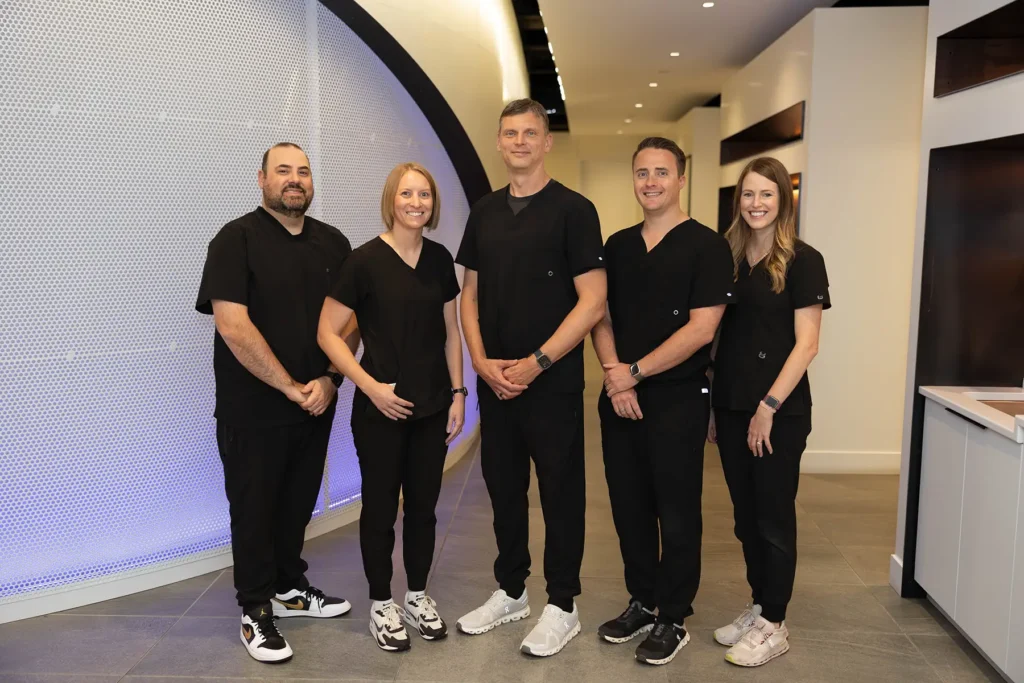
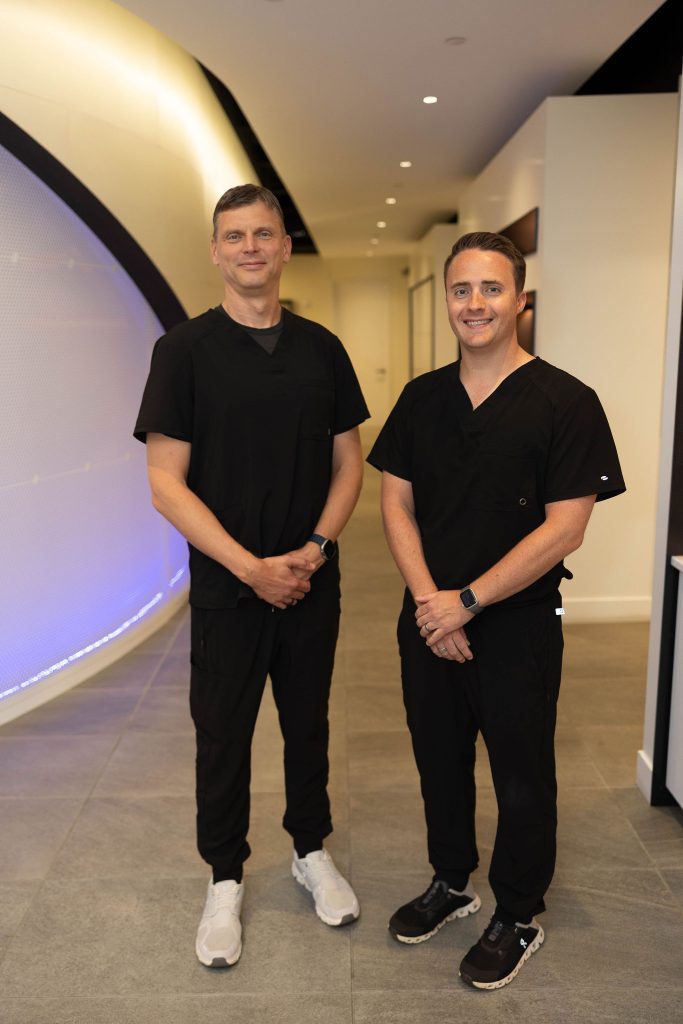
Meet Your PRK Surgeons in Omaha
Lance Kugler, M.D.
Lance Kugler, MD is a fellowship-trained corneal and refractive surgeon and one of the most credentialed vision correction specialists in the country. Trained at the Wang Vision Institute under world-renowned corneal surgeon Dr. Ming Wang, Dr. Kugler served as Director of Refractive Surgery at the University of Nebraska Medical Center, where he led resident education and clinical research programs to advance the field. A published researcher in peer-reviewed journals including the Journal of Refractive Surgery, national board member, and Board Certified Fellow of the World College of Refractive Surgery and Visual Sciences, Dr. Kugler brings deep clinical expertise and a thorough understanding of when PRK is the right choice to every patient he sees.
Drew Dickson, M.D.
Drew Dickson, MD is a board-certified cataract and refractive surgeon and a Fellow of the World College of Refractive Surgery and Visual Sciences. He completed his ophthalmology residency at the Storm Eye Institute at the Medical University of South Carolina, a top-10 residency program, before completing his refractive surgery fellowship directly under Dr. Kugler at Kugler Vision. He also holds a Physician CEO designation from the Kellogg School of Management at Northwestern University. Dr. Dickson takes a deeply patient-centered approach, partnering with each patient to develop a customized vision correction plan tailored to their individual needs, goals, and anatomy.
11x
Best of
Omaha
1K+
5-Star
Reviews
47
States
Served
The Procedure
How Does PRK Work?
PRK is a straightforward laser procedure performed entirely on the surface of the eye. There is no flap and no incision inside the cornea. Here’s what to expect on your procedure day.
1. EyeAnalysis™ Confirmation
Your pre-operative diagnostic measurements are reviewed one final time. The excimer laser is calibrated to the precise treatment parameters mapped to your eye. Your surgeon walks you through each step before beginning.
2. Numbing & Preparation
Anesthetic eye drops are applied so you feel no pain. A gentle lid holder keeps your eye open, and you’ll be asked to look at a fixed light throughout the procedure. A mild sedative like Valium is available to help you relax.
3. Epithelial Removal
The thin outer layer of the cornea, called the epithelium, is gently loosened and removed. This exposes the corneal surface beneath and takes only a few seconds. No flap is created, and no second laser pass is needed to prepare the surface.
4. Laser Reshaping
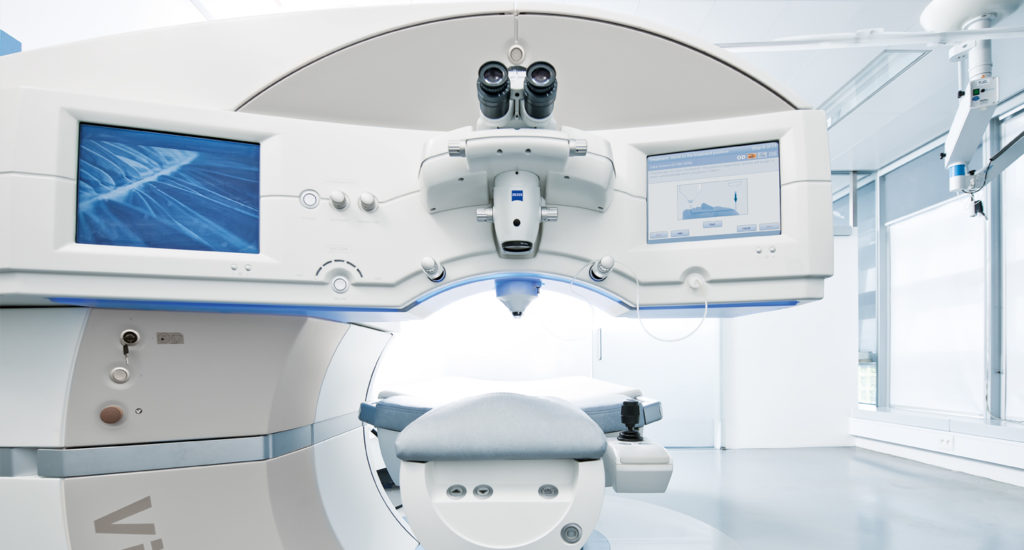
The WaveLight EX500 excimer laser reshapes the corneal surface according to your personalized treatment plan. The laser is active for only seconds, and the eye-tracking system adjusts in real time to account for any eye movement.
5. Bandage Lens Placement
A soft, protective contact lens is placed on the eye immediately after the procedure, usually being removed 5 to 7 days following the procedure. This bandage lens shields the surface as the epithelium regenerates over the following days and keeps the eye comfortable during the early healing phase.
Ideal Candidates
Who is a Good Candidate for PRK?
PRK is most often recommended for patients who want laser vision correction but have specific corneal characteristics. General candidacy guidelines include:
Adults with myopia (nearsightedness), hyperopia (farsightedness), or astigmatism with a stable prescription for at least one year
Patients with thinner-than-average corneas for whom flap-based or lenticule-based procedures would leave insufficient residual corneal tissue
Patients who were told they are not candidates for other vision correction procedures. Over 80 percent of those who come to Kugler Vision having been turned away elsewhere find a procedure that works for them
“PRK is one of those procedures that patients often arrive skeptical about, because they came in expecting something else. What I tell them is that the end result is the same. The route there is just different, and for their specific cornea, it is actually the safer route. The longer recovery is real, and I want patients to go in with clear expectations. But the outcome data is excellent, and for the right patient, PRK is exactly the right choice.” – Lance Kugler, MD
PRK Technology
The Technology Behind Your Procedure
PRK at Kugler Vision uses the same advanced excimer laser platform that powers our other vision correction procedures, ensuring precision and consistency at the highest standard available.
WaveLight EX500 Excimer Laser
The excimer laser that reshapes your cornea during PRK is one of the fastest and most precise platforms available. It delivers wavefront-optimized treatment that preserves the natural shape of the cornea, improving visual quality in all lighting conditions including at night. The system tracks your eye 400 times per second, so any minor movement during the procedure has no effect on your result.
Contoura / VARIO Topography-Guided System
For patients with irregular corneal surfaces, one of the most common reasons PRK is the recommended approach, this system delivers a fully customized treatment based on your individual corneal topography. It allows us to treat patients with surface irregularities that fall outside the parameters of standard laser treatment, often improving not just the prescription but the overall optical quality of the eye.
EyeAnalysis™ Diagnostic Suite
Every PRK candidate undergoes our comprehensive pre-operative EyeAnalysis™, which includes the OCULUS Pentacam HD for corneal mapping, the iTrace Wavefront Analyzer for optical quality assessment, and additional imaging tools that give Dr. Kugler a complete picture of your corneal anatomy before any treatment is planned.
What to Expect
PRK
Recovery and Results
PRK recovery takes more time than other laser vision correction procedures, and we want every patient to understand that going in. The trade-off for the added recovery time is a procedure that is often the safest option for a specific corneal anatomy. Here is what to expect honestly and completely.
Days
1-2
Vision will be blurry immediately after PRK, and the bandage contact lens placed at the end of your procedure will stay in place during this time. Most patients experience mild to moderate discomfort starting around day two as the epithelium begins to regenerate. This is normal and expected. Prescribed pain medication, medicated drops, and lubricating tears are used to keep your eyes as comfortable as possible.
Days
3-5
This is typically the most uncomfortable phase of PRK recovery. Eyes may feel irritated, sensitive to light, and watery. Following your post-operative drop schedule closely during this period is the single most important thing you can do to support healing. The bandage lens is usually removed by your surgeon around day five once the epithelium has healed over the surface.
Week
2
Discomfort resolves for most patients, and functional vision, clear enough to drive and return to work, is typically present by days four to five. Screen time should be kept to a minimum and lubricating drops used frequently. Makeup and swimming should be avoided for at least one week post-procedure.
Months
1-6
PRK vision continues to improve and stabilize over the following weeks and months. Full visual clarity can take anywhere from one to six months depending on the individual. Most patients reach their best final acuity by the three-to-six month mark. This extended stabilization period is normal for PRK and does not indicate a problem.
Safety & Confidence
Is PRK Safe?
Yes. PRK has one of the longest safety records in elective eye surgery, with more than three decades of peer-reviewed clinical data supporting its effectiveness. It is FDA-approved for the correction of myopia, hyperopia, and astigmatism and has been used by the U.S. military as an approved vision correction procedure for service members across multiple branches. Because no corneal flap is created, PRK eliminates an entire category of potential complications associated with flap-based procedures, including flap dislocation and flap-related dry eye. A small number of patients develop corneal haze during healing, which is managed with prescription drops and resolves in the majority of cases. A small percentage of patients require an enhancement to fine-tune results. Serious complications including infection or significant vision loss are rare. Dr. Kugler and Dr. Dickson review all of these with every patient personally before any decision is made.
“PRK has been correcting vision for over 30 years, and in many ways it is the procedure I trust most for patients with corneas that need a more conservative approach. The recovery asks more of patients, but the outcomes are just as strong, and for the right candidate, there is no better option. What I want every PRK patient to know going in is that the discomfort in the first week is temporary, the results are permanent, and our team is with them every step of the way.” – Lance Kugler, MD
Pricing & Financing
How Much Does PRK Cost in Omaha?
PRK pricing at Kugler Vision is straightforward. Like all vision correction options, PRK pricing details will be provided in full at your private EyeAnalysis™ consultation. When you factor in a lifetime of corrective lenses, glasses, contacts, solutions, and annual prescription updates, vision correction typically pays for itself within approximately five years and continues saving you money every year after that. We offer flexible financing through Alphaeon Credit with 0% interest when your balance is paid in full within 24 months, and PRK is both FSA and HSA eligible, allowing you to use pre-tax dollars toward the cost.
Common Questions
Frequently Asked Questions About PRK
Have more questions? Our team is happy to talk through anything before your consultation.
How is PRK different from LASIK?
Both procedures use an excimer laser to reshape the cornea and correct the same range of refractive errors, and both deliver equivalent long-term visual results. The key difference is how the corneal surface is accessed. LASIK creates a thin corneal flap using a femtosecond laser, applies the excimer laser beneath it, then replaces the flap, a process completed in under 10 minutes per eye with roughly 24-hour recovery. PRK removes the epithelium entirely, applies the excimer laser directly to the surface, and allows the epithelium to regenerate naturally over several days. Recovery from PRK takes longer and involves more discomfort in the first week, but produces the same quality of vision once healing is complete.
Does PRK hurt?
The procedure itself is painless. Anesthetic drops are applied beforehand and you will feel only mild pressure. The days following PRK are a different story. Most patients experience notable eye irritation, light sensitivity, and watering from around day two through day five as the epithelial cells regenerate. This is a normal part of healing. Prescribed pain medication, medicated drops, and lubricating tears are used to manage discomfort, and the protective bandage contact lens placed at the end of your procedure provides additional comfort during this phase.
Does PRK wear off?
No. PRK permanently changes the shape of the cornea, and that change does not revert. Changes in near vision that some patients notice beginning in their mid-to-late forties are caused by natural aging of the eye’s internal lens, not by PRK, and are treatable if they become a concern.
Can I have PRK if I was told I'm not a candidate for other vision correction procedures?
Possibly, and PRK is often exactly the right answer for patients in this situation. Thin corneas, surface irregularities, and certain corneal characteristics that rule out flap-based procedures frequently still allow for PRK, which requires no flap creation and works entirely on the surface of the eye. Over 80 percent of patients who come to Kugler Vision after being turned away elsewhere find a procedure that works for them. A thorough EyeAnalysis™ consultation is the only way to know for certain.
Can both eyes be treated on the same day?
Yes. We routinely perform PRK on both eyes in a single session, which means one recovery period and one drop schedule to manage. Your surgeon will confirm this is appropriate for your case at your pre-operative appointment.
What should I look for when choosing a PRK surgeon?
Look for a surgeon who is fellowship-trained in corneal and refractive ophthalmology, performs PRK regularly alongside other vision correction procedures, and uses a thorough diagnostic process to confirm candidacy before recommending the procedure. Because PRK recovery is more involved than other laser options, a surgeon’s transparency about what to expect and their availability for post-operative support matters more here than with faster-recovery procedures. Ask how they determine which procedure is right for your specific corneal anatomy. Both Dr. Kugler and Dr. Dickson meet all of these criteria.
Patient Stories
Hear From Our
PRK Patients




Visit Us
Our Omaha
Location
As the only team in Omaha to specialize in all seven vision correction procedures– we have customized solutions to treat even tough vision problems so you can experience life glasses and contacts free.
Our Office
17838 Burke St. Suite 100
Omaha, NE 68118
Call Us
(402) 558-2211
Office Hours
Mon-Fri:
7:45AM-5PM
Sat-Sun: Closed
Schedule Today
Schedule Your
Consultation in Omaha
At Kugler Vision, your modern procedure is tailored to deliver the very best experience possible – that’s why we’ve been voted the Best in Omaha provider by our patients eleven years in a row!